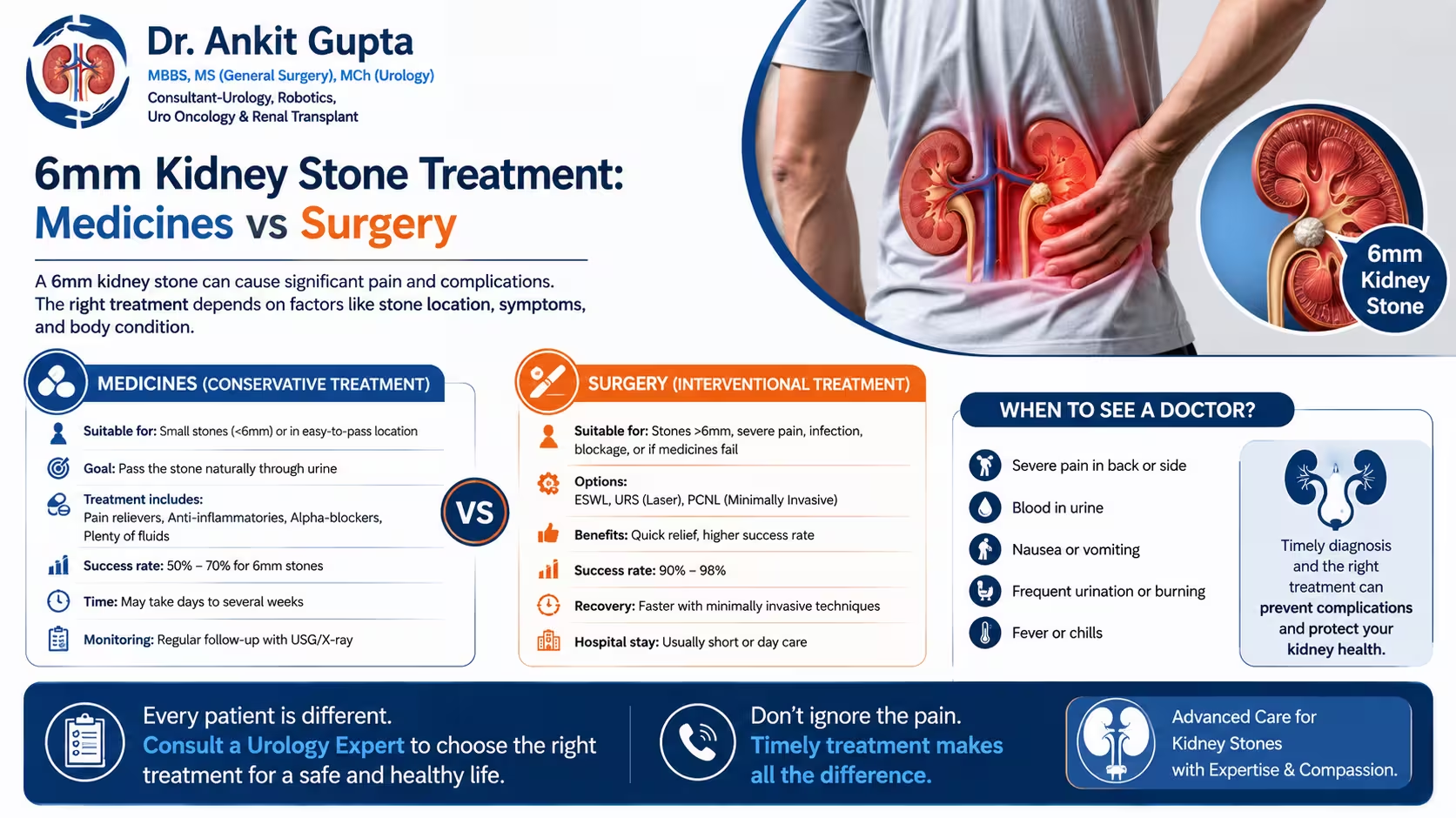
A 6mm kidney stone sits on the borderline for natural passage. Treatment depends on your symptoms and where the stone is located. Doctors often try medication first if pain is controlled, but a 6mm stone may need a minimally invasive procedure if it blocks urine or causes severe pain.
What Is a 6mm Kidney Stone?
A kidney stone is a hard deposit that forms when certain minerals and salts in urine become concentrated and form crystals. These crystals can gradually grow into a stone.
A 6mm kidney stone measures approximately 0.6 cm. Although it is not considered a very large stone, it is not small enough to assume that it will definitely pass naturally.
The treatment decision depends on the stone's size, location, symptoms, and whether it is causing urinary obstruction or other complications.
Is a 6mm Kidney Stone Considered Large?
A 6mm stone is generally considered a small-to-moderate-sized stone. However, even a stone of this size can become stuck in the ureter and cause significant pain or urinary obstruction.
A stone inside the kidney may remain without causing symptoms, whereas a stone that moves into the ureter may cause renal colic.
Therefore, a 6mm kidney stone does not automatically mean that surgery is required.
Where Can a 6mm Stone Be Located?
A 6mm stone may be located:
- Inside the kidney
- At the junction between the kidney and ureter
- In the upper ureter
- In the middle ureter
- In the lower ureter
- Near the bladder
The exact location is important because it can influence the likelihood of natural passage and the choice of treatment.
Can a 6mm Kidney Stone Pass Naturally?
Yes, a 6mm stone can sometimes pass naturally, but it is not guaranteed.
The likelihood of spontaneous passage depends mainly on the stone's location and size. Selected ureteral stones may be managed initially with observation when there is no infection, dangerous obstruction, uncontrolled pain, or deterioration in kidney function.
However, a patient should not simply wait indefinitely for a 6mm stone to pass. Follow-up with a urologist and appropriate imaging may be necessary.
What Factors Affect Natural Stone Passage?
The possibility of natural passage depends on:
- Stone size
- Stone location
- Stone shape
- Ureter anatomy
- Degree of obstruction
- Presence of infection
- Severity of symptoms
- Kidney function
Does the Location of the Stone Matter?
Yes. Stone location is one of the most important factors affecting natural passage.
A stone located in the lower ureter, closer to the bladder, may have a better chance of passing than a stone located higher in the urinary tract.
This is why the exact location mentioned in an ultrasound or CT scan is important when deciding whether observation is appropriate.
Confused about your symptoms? Get FREE expert advice on WhatsApp now.
What Are the Symptoms of a 6mm Kidney Stone?
A 6mm stone may not cause any symptoms when it remains inside the kidney. Symptoms often develop when the stone moves into the ureter or interferes with normal urine flow.
Severe Flank or Back Pain
Kidney stone pain commonly occurs in the side or back. It may move toward the lower abdomen, pelvis, or groin.
The pain can be severe and may come in waves.
Blood in the Urine
A kidney stone can irritate the lining of the urinary tract and cause blood in the urine.
The blood may be visible or detected only through urine testing.
Burning During Urination
Burning while urinating may occur when the stone moves toward the lower urinary tract.
However, burning can also indicate a urinary infection and should not automatically be considered a kidney stone symptom.
Frequent Urination
A stone located close to the bladder may cause urinary urgency or frequent urination.
Nausea and Vomiting
Severe kidney stone pain can cause nausea and vomiting. Persistent vomiting can also result in dehydration.
How Is a 6mm Kidney Stone Diagnosed?
Proper diagnosis is important before deciding whether a 6mm stone should be observed or treated.
Ultrasound KUB
An ultrasound of the kidneys, ureters, and bladder can help identify a stone and may show associated hydronephrosis.
Non-Contrast CT Scan
A Non-Contrast CT scan can provide detailed information about:
- Exact stone size
- Stone location
- Number of stones
- Stone density
- Degree of obstruction
CT findings can help the urologist decide which treatment option may be appropriate.
Urine Tests
Urine examination may be performed to check for:
- Blood
- Infection
- Crystals
- Other abnormalities
Blood Tests
Depending on the patient's condition, blood tests may include:
- Serum Creatinine
- Kidney function tests
- Uric acid
- Electrolytes
- Other relevant investigations
Get expert advice for kidney stone, prostate & urology problems — FREE
6mm Kidney Stone Treatment Options
Treatment can generally be divided into medical management and observation or active stone removal.
The appropriate option depends on the individual patient's condition.
Medicines and Observation
Observation may be considered when:
- The stone has a reasonable chance of passing.
- Pain is manageable.
- There is no significant infection.
- There is no dangerous obstruction.
- Kidney function is stable.
- Follow-up is possible.
The doctor may prescribe pain-relieving medicines and, in selected ureteral stones, medicines that may facilitate stone passage.
Medical Expulsive Therapy
Medical Expulsive Therapy, or MET, refers to medicines that may help facilitate the passage of selected ureteral stones.
An alpha-blocker such as Tamsulosin may be considered in certain patients, particularly for selected distal ureteral stones.
Tamsulosin does not dissolve the stone. It may help relax the ureter and facilitate stone passage.
It should only be taken after consultation with a doctor.
Can a 6mm Kidney Stone Dissolve With Medicine?
Most kidney stones cannot be dissolved with medicines.
The possibility of medical dissolution depends on the chemical composition of the stone.
Can Uric Acid Stones Be Dissolved?
Some uric acid stones can potentially be dissolved through appropriate medical treatment that changes urine chemistry.
This treatment requires medical supervision.
Can Calcium Stones Be Dissolved?
Calcium oxalate and calcium phosphate stones are common kidney stones and generally cannot be dissolved with standard medicines.
Depending on their location and symptoms, they may require observation or active stone treatment.
Why Is Stone Composition Important?
Knowing the stone composition can help with future prevention.
If a stone is passed or removed, the doctor may recommend stone analysis to determine its composition.
Only Limited Free Consultation Slots Available Today.
When Does a 6mm Kidney Stone Need Surgery?
A 6mm stone does not automatically require surgery.
However, active treatment may become necessary when the stone is unlikely to pass or starts causing complications.
Persistent or Severe Pain
If pain remains severe despite appropriate medication, active stone removal may be considered.
The Stone Does Not Pass
If the stone remains in the urinary tract despite an appropriate period of observation, repeat imaging may be recommended.
The urologist can then decide whether continued observation or active treatment is more appropriate.
Urinary Obstruction
A stone can block the normal flow of urine from the kidney to the bladder.
Persistent obstruction can potentially affect kidney function.
Hydronephrosis
When urine cannot drain properly because of an obstruction, the kidney may become swollen. This is called hydronephrosis.
Infection With a Kidney Stone
A urinary infection combined with obstruction can be serious.
Fever, chills, severe weakness, or worsening pain in a patient with a kidney stone requires prompt medical evaluation.
Kidney Function Is Affected
If tests show that the stone is affecting kidney function, active treatment may be recommended.
Surgical Options for a 6mm Kidney Stone
When active treatment is required, the procedure depends on the stone's location and characteristics.
RIRS
RIRS stands for Retrograde Intrarenal Surgery.
It is a minimally invasive procedure used for selected stones located inside the kidney.
A flexible ureteroscope is passed through the natural urinary passage and guided into the kidney. The stone is then visualized and fragmented using laser energy.
How Does RIRS Work?
The procedure generally involves:
- Passing a flexible ureteroscope through the urinary passage.
- Reaching the kidney.
- Identifying the stone.
- Fragmenting the stone using laser energy.
- Removing suitable fragments.
- Allowing very small fragments to pass naturally when appropriate.
A temporary ureteral stent may be placed when required.
Ureteroscopy With Laser
Ureteroscopy is commonly used for stones located in the ureter.
A thin scope is passed through the urinary tract until the stone is reached.
The stone can then be fragmented using laser energy and removed using appropriate instruments.
Is a Stent Required After Ureteroscopy?
A temporary ureteral stent may be placed after the procedure depending on the condition of the ureter, swelling, urinary drainage, and other factors.
Shock Wave Lithotripsy
SWL stands for Shock Wave Lithotripsy.
It uses focused shock waves from outside the body to break the stone into smaller fragments.
The fragments can then pass through the urinary tract.
Is SWL Suitable for Every 6mm Stone?
No.
The suitability of SWL depends on:
- Stone location
- Stone density
- Stone composition
- Patient anatomy
- Skin-to-stone distance
- Urinary drainage
A urologist can determine whether SWL is appropriate after reviewing the imaging.
Is PCNL Required for a 6mm Kidney Stone?
Usually, PCNL is not required simply because a stone is 6mm.
PCNL is generally used for larger or complex kidney stones. For a straightforward 6mm stone requiring active treatment, RIRS, ureteroscopy, or SWL may be considered depending on the individual case.
Confused about your symptoms? Get FREE expert advice on WhatsApp now.
RIRS vs Ureteroscopy vs SWL for a 6mm Stone
The three procedures have different applications.
RIRS
RIRS is generally used for stones located inside the kidney.
The urologist can directly visualize the stone and use laser energy to fragment it.
Ureteroscopy With Laser
Ureteroscopy is commonly used for stones located in the ureter.
The stone is directly visualized and treated during the procedure.
SWL
SWL uses shock waves generated outside the body to fragment the stone.
The suitability depends on the stone's location and characteristics.
Which Treatment Is Best for a 6mm Stone?
There is no single treatment that is best for every patient.
The choice depends on:
- Stone location
- Stone density
- Symptoms
- Degree of obstruction
- Kidney function
- Patient anatomy
- Previous treatment
- Patient preference
A urologist should evaluate these factors before recommending a particular procedure.
How Much Water Should You Drink With a 6mm Kidney Stone?
Adequate hydration is important for kidney stone management and prevention.
However, drinking excessive amounts of water does not guarantee that a 6mm stone will pass.
Should You Force Yourself to Drink Excessive Water?
No.
If your doctor has not restricted your fluid intake, maintain adequate hydration throughout the day.
Patients with kidney disease, heart disease, significant obstruction, repeated vomiting, or other conditions may require individualized fluid advice.
Get expert advice for kidney stone, prostate & urology problems — FREE
Can Home Remedies Remove a 6mm Kidney Stone?
There is no guaranteed home remedy that can remove a 6mm kidney stone.
Hydration and a healthy lifestyle may support urinary health, but home remedies should not replace proper medical evaluation.
What Can You Do at Home?
If your urologist recommends observation, you may be advised to:
- Drink adequate fluids unless restricted.
- Take prescribed medicines.
- Monitor symptoms.
- Follow the recommended follow-up schedule.
- Attend repeat imaging appointments.
What Should You Avoid?
Avoid:
- Taking antibiotics without medical advice.
- Taking prescription medicines without consultation.
- Drinking excessive amounts of water to force the stone out.
- Ignoring fever or chills.
- Assuming pain relief means the stone has passed.
How Long Does a 6mm Kidney Stone Take to Pass?
There is no fixed number of days that applies to every 6mm stone.
The time can vary depending on:
- Stone location
- Stone size
- Stone shape
- Ureter anatomy
- Degree of obstruction
- Individual patient factors
What If the Stone Does Not Pass?
If the stone remains in the urinary tract, the urologist may recommend repeat imaging.
If the stone continues to cause symptoms or obstruction, active treatment may be recommended.
Only Limited Free Consultation Slots Available Today.
Can a 6mm Kidney Stone Damage the Kidney?
A kidney stone can potentially affect kidney function when it causes persistent urinary obstruction.
How Does Obstruction Affect the Kidney?
When urine cannot drain normally, pressure can build up within the urinary system.
If obstruction continues for a prolonged period, kidney function may be affected.
When Is the Risk Higher?
The concern is greater when obstruction occurs with:
- Infection
- Significant hydronephrosis
- Reduced kidney function
- Bilateral obstruction
- A single functioning kidney
What Are the Emergency Symptoms of a 6mm Kidney Stone?
Certain symptoms require urgent medical attention.
Fever or Chills
Fever and chills may indicate infection, particularly when a stone is causing obstruction.
Severe Uncontrolled Pain
Severe pain that does not improve with prescribed medication requires medical evaluation.
Persistent Vomiting
Repeated vomiting can cause dehydration and may require medical treatment.
Difficulty or Inability to Pass Urine
Difficulty passing urine or being unable to urinate may indicate significant obstruction.
Stone in a Single Functioning Kidney
A stone causing obstruction in a person with a single functioning kidney requires prompt medical evaluation.
Confused about your symptoms? Get FREE expert advice on WhatsApp now.
How Can You Prevent Another Kidney Stone?
Prevention becomes important after having a kidney stone.
Maintain Adequate Hydration
Adequate fluid intake helps dilute urine and may reduce the concentration of substances that contribute to stone formation.
Reduce Excess Salt
A high-sodium diet can increase urinary calcium and may contribute to certain kidney stones.
Follow a Balanced Diet
The ideal diet depends on your stone type and individual risk factors.
Get the Stone Analyzed
If a stone is removed or passed, laboratory analysis can identify its composition and help guide future prevention.
Consider a 24-Hour Urine Test
Patients with recurrent kidney stones may benefit from a 24-hour urine evaluation to identify factors that increase stone formation.
6mm Kidney Stone: Medicines vs Surgery — Which Is Better?
There is no universal answer.
When Medicines and Observation May Be Appropriate
Observation and medical management may be considered when:
- The stone has a reasonable chance of passing.
- Pain is manageable.
- There is no significant infection.
- There is no dangerous obstruction.
- Kidney function is stable.
- Follow-up is possible.
When Active Stone Removal May Be Better
Active treatment may be considered when:
- The stone is unlikely to pass.
- Pain remains persistent.
- Urinary obstruction continues.
- Hydronephrosis develops or worsens.
- Infection occurs with obstruction.
- Kidney function is affected.
- The patient has a single functioning kidney with obstruction.
Get expert advice for kidney stone, prostate & urology problems — FREE
6mm Kidney Stone Treatment in Gurgaon
If you have been diagnosed with a 6mm kidney stone in Gurgaon, it is important not to decide on treatment based only on the size mentioned in the scan report.
Dr. Ankit Gupta, Best Urologist in Gurgaon, evaluates kidney and urinary tract conditions by considering the stone's size, exact location, symptoms, urinary obstruction, infection, and kidney function.
Depending on the individual case, treatment may include:
- Observation
- Medical management
- Medical Expulsive Therapy
- SWL
- Ureteroscopy with Laser
- RIRS
- Other appropriate stone removal procedures
The most suitable treatment should be selected after proper clinical evaluation and review of imaging.
Frequently Asked Questions About 6mm Kidney Stones
Can a 6mm kidney stone pass naturally?
Yes, some 6mm stones can pass naturally, particularly selected ureteral stones. However, natural passage is not guaranteed and depends on the stone's location, size, symptoms, and other individual factors.
Does every 6mm kidney stone require surgery?
No. Some patients can be managed with observation and medicines. Surgery may be recommended if the stone does not pass or causes persistent pain, obstruction, infection, or kidney-related complications.
What medicine is used for a 6mm kidney stone?
A urologist may prescribe pain-relieving medicines and, in selected ureteral stones, Medical Expulsive Therapy. The exact medicine should be decided by a doctor.
Can Tamsulosin dissolve a 6mm kidney stone?
No. Tamsulosin does not dissolve a kidney stone. It may help facilitate the passage of selected ureteral stones.
Can a 6mm kidney stone dissolve with medicine?
Most kidney stones cannot be dissolved with standard medicines. Some uric acid stones may respond to appropriate medical treatment under supervision.
Can a 6mm kidney stone be treated with laser?
Yes. Laser energy can be used during RIRS or ureteroscopy to fragment appropriately selected kidney or ureteral stones.
Is RIRS suitable for a 6mm kidney stone?
RIRS can be considered for selected kidney stones when active treatment is required. The decision depends on stone location, anatomy, symptoms, and other factors.
Is SWL suitable for a 6mm kidney stone?
SWL can be an option for selected 6mm stones. Suitability depends on stone location, density, anatomy, and patient-specific factors.
Is PCNL needed for a 6mm kidney stone?
Usually, PCNL is not required for a straightforward 6mm stone. It is generally used for larger or complex kidney stones.
Can a 6mm kidney stone cause hydronephrosis?
Yes. If the stone blocks urine drainage, it can cause urine to accumulate in the kidney and lead to hydronephrosis.
Can a 6mm kidney stone cause blood in urine?
Yes. Kidney and ureteral stones can irritate the urinary tract and cause blood in the urine.
Is frequent urination a symptom of a 6mm kidney stone?
It can be, particularly when the stone is located in the lower ureter or near the bladder.
When should I see a urologist for a 6mm kidney stone?
You should seek medical evaluation for persistent or severe pain, fever, chills, difficulty passing urine, repeated vomiting, significant blood in urine, or symptoms suggesting infection or urinary obstruction.
Only Limited Free Consultation Slots Available Today.
Our Treatments
- Kidney Stone Treatment
- Prostate Enlargement Treatment
- Kidney Transplant Surgery
- Kidney Cancer Treatment
Other Blogs
- पेशाब में खून आना क्यों होता है?
-
बार-बार पेशाब आना क्या Stone का लक्षण है?
- कमर में तेज दर्द क्या Kidney Stone का संकेत है?
- Kidney Stone के सबसे बड़े कारण क्या हैं?
-
5mm Kidney Stone का इलाज क्या है?
-
4mm Kidney Stone अपने आप निकल सकता है?
-
3mm Kidney Stone कितना गंभीर है?
Confused about your symptoms? Get FREE expert advice on WhatsApp now.
Conclusion
A 6mm kidney stone does not automatically require surgery, but it should not be assumed that it will definitely pass naturally.
The most important factors are the stone's location, symptoms, urinary obstruction, infection, kidney function, and likelihood of spontaneous passage.
For selected patients, medicines, Medical Expulsive Therapy, and observation may be appropriate. If the stone does not pass or causes persistent pain, urinary obstruction, hydronephrosis, infection, or kidney-related complications, active treatment such as RIRS, Ureteroscopy with Laser, or SWL may be recommended.
The right treatment should be based on proper imaging and evaluation by a urologist rather than the 6mm measurement alone.
If you have been diagnosed with a 6mm kidney stone in Gurgaon, consulting an experienced urologist can help determine whether medicines, observation, or active stone removal is the most appropriate option for your condition.