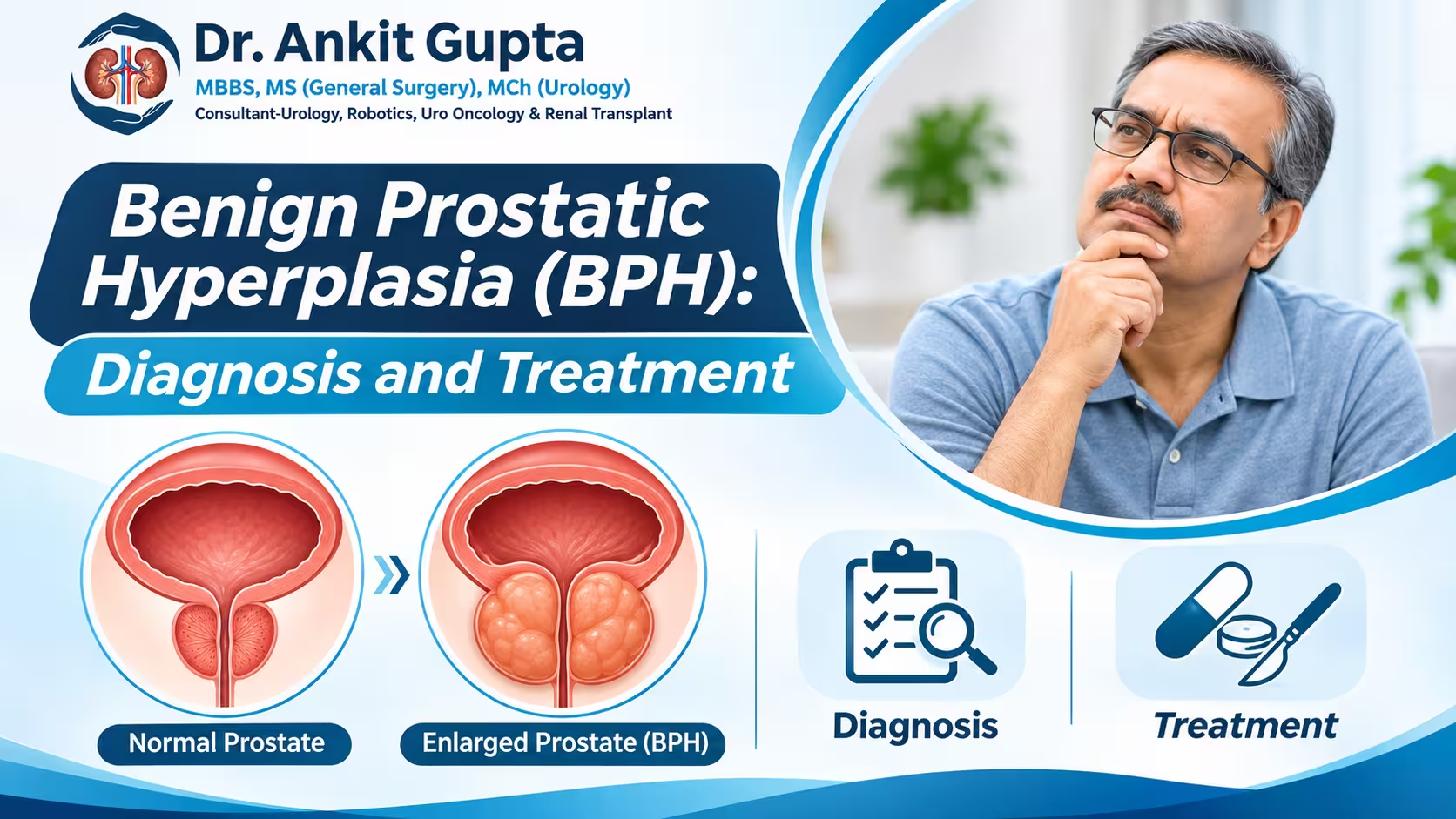
Benign prostatic hyperplasia (BPH) is a noncancerous enlargement of the prostate gland that can press against the urethra and block or slow urine flow. It is very common as people with a prostate age, affecting roughly 50% by age 60 and up to 90% by age 85.
What Is Benign Prostatic Hyperplasia (BPH)?
Benign prostatic hyperplasia is a non-cancerous enlargement of the prostate gland. The prostate is a small gland located below the bladder and surrounding the urethra, the tube that carries urine out of the body.
As the prostate grows, it may press against the urethra and restrict urine flow. This can lead to different urinary problems, particularly in older men. BPH becomes more common with age, but not every man with an enlarged prostate experiences noticeable symptoms.
It is important to understand that BPH is not prostate cancer, and having BPH does not mean that a person will develop prostate cancer.
Common Symptoms of an Enlarged Prostate
The symptoms of BPH usually develop gradually. However, they may become more noticeable as the prostate continues to enlarge.
Common enlarged prostate symptoms include:
- Frequent urination: Needing to pass urine more often during the day.
- Nocturia: Waking up multiple times at night to urinate.
- Weak urine flow: Experiencing a slow or reduced urine stream.
- Difficulty starting urination: Taking longer than usual to begin passing urine.
- Interrupted urine stream: Urine flow repeatedly starts and stops.
- Urgency: Feeling a sudden and strong need to urinate.
- Incomplete bladder emptying: Feeling that some urine remains in the bladder after urination.
- Dribbling: Experiencing urine leakage shortly after using the bathroom.
The severity of symptoms does not always correspond to prostate size. Even a moderately enlarged prostate can cause significant urinary problems in some men.
Confused about your symptoms? Get expert advice on WhatsApp now.
How Is Benign Prostatic Hyperplasia Diagnosed?
A urologist evaluates the patient's symptoms, medical history and physical examination findings before recommending treatment. The purpose of BPH diagnosis is to confirm prostate enlargement, understand how it affects urine flow and rule out other conditions that may cause similar symptoms.
Common diagnostic tests include:
1. Medical History and Symptom Assessment
The doctor asks about urinary habits, symptom duration, nighttime urination and any difficulty emptying the bladder. A symptom questionnaire may also be used to assess how much BPH affects daily life.
2. Digital Rectal Examination (DRE)
During this examination, the doctor gently checks the prostate through the rectum to assess its size, shape and texture.
3. Urine Test
A urine sample is examined to identify infections, blood or other abnormalities that may contribute to urinary symptoms.
4. PSA Blood Test
A prostate-specific antigen (PSA) test measures the level of PSA in the blood. PSA levels may increase with prostate enlargement, but they can also rise due to other conditions, including prostate cancer. Therefore, this test is interpreted alongside other findings.
5. Ultrasound and Post-Void Residual Test
Ultrasound may help assess prostate size and bladder condition. A post-void residual test measures how much urine remains in the bladder after urination.
6. Uroflowmetry
This test measures the speed and pattern of urine flow. It helps doctors understand whether an enlarged prostate may be obstructing urine passage.
7. Cystoscopy and Urodynamic Tests
In selected cases, a doctor may recommend cystoscopy to examine the urethra and bladder or urodynamic tests to assess bladder function and pressure.
Not every patient needs all these investigations. The tests depend on symptoms, examination findings and individual medical needs.
What Are the Treatment Options for BPH?
The right benign prostatic hyperplasia treatment depends on prostate size, symptom severity, age, overall health and the presence of complications. Some men may only need regular monitoring, while others require medication or a surgical procedure.
1. Watchful Waiting and Lifestyle Changes
Men with mild symptoms that do not significantly affect daily life may be advised to undergo regular monitoring rather than start immediate treatment.
Certain lifestyle changes can help manage urinary problems:
- Reduce fluid intake close to bedtime.
- Limit caffeine and alcohol, as they may worsen urinary symptoms.
- Maintain a healthy weight and exercise regularly.
- Avoid delaying urination when you feel the urge.
- Discuss medicines such as decongestants and antihistamines with your doctor, as some can make urination more difficult.
These measures may help control symptoms but do not necessarily reduce prostate size.
2. Medications for Enlarged Prostate
Enlarged prostate medication may be prescribed when symptoms are moderate or bothersome.
Common options include:
- Alpha-blockers: These medicines relax muscles around the prostate and bladder neck, making it easier to pass urine.
- 5-alpha reductase inhibitors: These medicines gradually reduce prostate size by affecting hormonal activity. They may take several months to show noticeable results.
- Combination therapy: In some cases, doctors prescribe both types of medicines to improve symptom control.
The choice of medication depends on the patient's condition and possible side effects. Medicines should only be taken under medical supervision.
Get expert advice for kidney stone, prostate & urology problems
Surgical Treatment for Benign Prostatic Hyperplasia
When medicines do not provide sufficient relief, or complications develop, BPH surgery may be recommended. Surgical procedures aim to remove or reduce the prostate tissue blocking urine flow.
Some commonly used procedures include:
1. TURP Surgery
Transurethral resection of the prostate (TURP) is a commonly performed procedure for treating an enlarged prostate. A thin instrument is passed through the urethra, allowing the surgeon to remove the excess prostate tissue that obstructs urine flow.
TURP can provide significant relief from urinary symptoms and improve urine flow.
2. HoLEP Surgery
Holmium laser enucleation of the prostate (HoLEP) is an advanced laser treatment for enlarged prostate. It uses laser energy to separate and remove the excess prostate tissue blocking the urethra.
HoLEP can be suitable for different prostate sizes, including significantly enlarged glands. The removed tissue can also be examined in a laboratory.
3. Other Minimally Invasive Procedures
Depending on prostate anatomy and patient suitability, other options may include:
- UroLift: Uses small implants to hold enlarged prostate tissue away from the urethra.
- Rezūm therapy: Uses controlled water vapour energy to treat excess prostate tissue.
- TUIP: Involves making small cuts in the prostate to reduce pressure on the urethra.
Each procedure has different benefits, limitations and possible side effects. A urologist can help determine the most appropriate option.
What Happens If BPH Is Left Untreated?
Mild BPH may remain stable for some time, but worsening urinary obstruction can lead to complications. These may include:
- Acute urinary retention, in which a person becomes unable to pass urine.
- Recurrent urinary tract infections due to incomplete bladder emptying.
- Bladder stones caused by retained urine.
- Blood in the urine.
- Bladder muscle damage.
- Kidney problems in severe cases of long-standing obstruction.
Sudden inability to urinate requires urgent medical attention. Early evaluation can help identify complications and determine whether treatment is needed.
Only Limited Consultation Slots Available Today.
Conclusion
Benign prostatic hyperplasia is a common condition among ageing men, but its symptoms should not be considered a normal part of getting older. Frequent urination, weak urine flow and difficulty emptying the bladder deserve proper medical evaluation. With timely BPH diagnosis, men can access suitable treatment options, ranging from lifestyle changes and medication to advanced procedures such as TURP and HoLEP.
The right approach depends on prostate size, symptom severity and overall health. If you are experiencing urinary problems, consult Dr. Ankit Gupta, a specialist to consider when searching for the Best Urologist in Gurgaon, for an appropriate evaluation and guidance on enlarged prostate treatment based on your condition.
Frequently Asked Questions About BPH
1. Is benign prostatic hyperplasia a type of cancer?
No. BPH is a non-cancerous enlargement of the prostate gland. However, its symptoms can overlap with those of other prostate conditions. A proper medical evaluation is important to identify the cause of urinary problems.
2. Can BPH be treated without surgery?
Yes. Many men with mild to moderate symptoms can manage BPH through lifestyle changes, regular monitoring and prescribed medication. Surgery may be considered if symptoms become severe or complications develop.
3. Which is better for BPH: TURP or HoLEP?
Both TURP and HoLEP can effectively improve urine flow. HoLEP uses laser energy and can treat larger prostates, while TURP remains an established treatment option. The appropriate procedure depends on prostate size, health and individual clinical findings.
4. Can an enlarged prostate damage the kidneys?
Severe and prolonged urinary obstruction caused by BPH can sometimes affect kidney function. This is why persistent urinary symptoms should not be ignored.