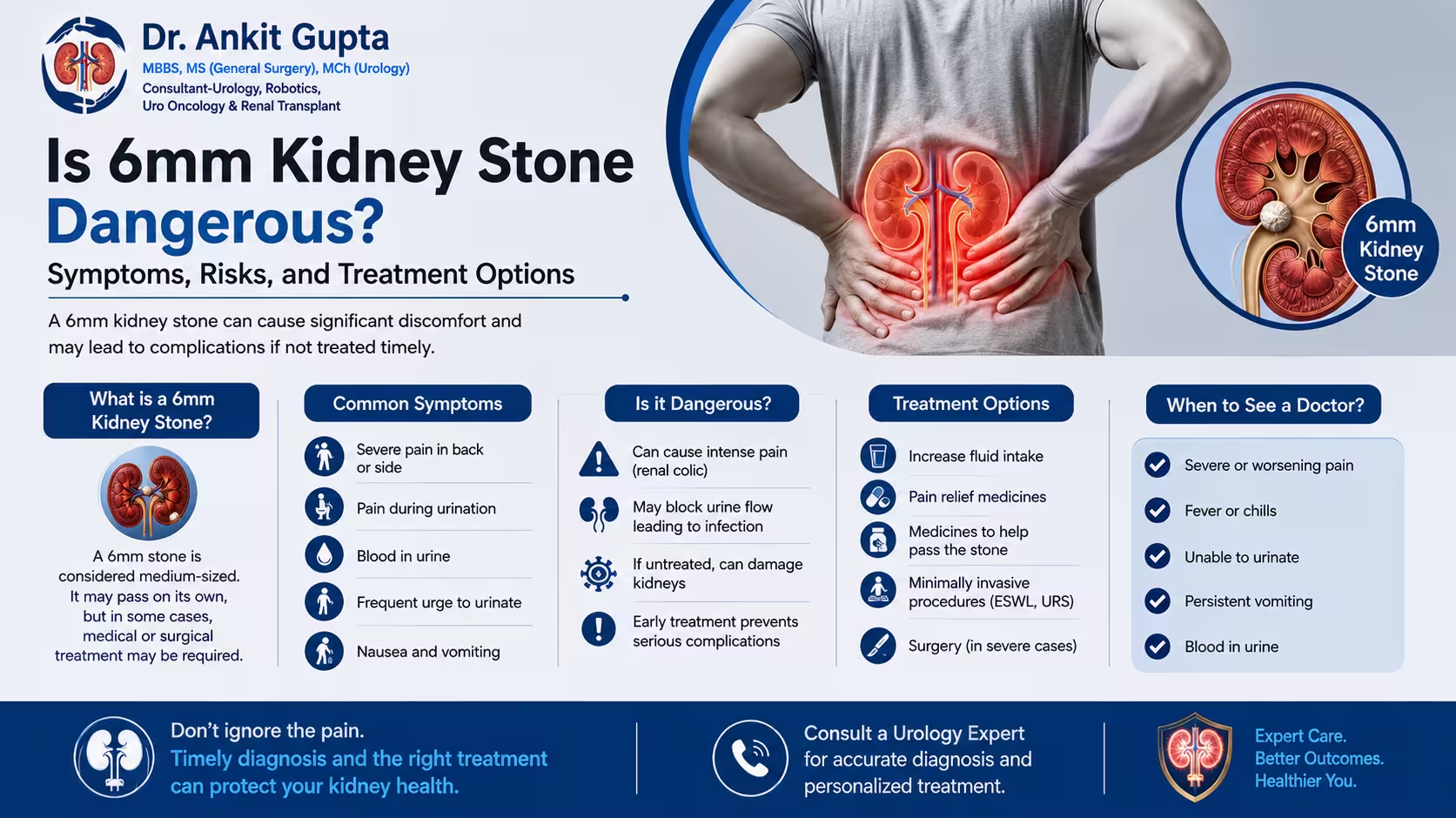
A 6mm kidney stone is moderately large and sits right at the borderline for natural passage. It has a lower chance (about 20% to 40%) of passing on its own through urine. While not an immediate life-or-death emergency on its own, it can become dangerous if it gets stuck in the ureter, blocks urine flow, or causes an infection.
Is a 6mm Kidney Stone Dangerous?
A 6mm kidney stone is not automatically dangerous, but it should not be ignored.
Some 6mm stones can pass naturally, particularly selected ureteral stones. However, the chances of spontaneous passage are lower as stone size increases, and treatment may be required if the stone remains stuck or causes complications.
A 6mm stone becomes more concerning when it causes:
- Persistent urinary obstruction
- Severe or uncontrolled pain
- Hydronephrosis
- Urinary infection
- Difficulty passing urine
- Reduced kidney function
Does Stone Location Matter?
Yes. The location of the stone can significantly affect its chances of passing naturally.
A 6mm stone located in the lower ureter may have a better chance of passing than one located higher in the ureter. A stone that remains inside the kidney may not cause symptoms until it moves into the urinary tract.
This is why an ultrasound or CT scan should be evaluated carefully before deciding on treatment.
What Are the Symptoms of a 6mm Kidney Stone?
A 6mm kidney stone may not cause symptoms if it remains inside the kidney. Symptoms usually occur when the stone moves or blocks urine flow.
Severe Back or Side Pain
Kidney stone pain commonly occurs in the side or back and may move toward the lower abdomen or groin.
The pain can be severe and may come in waves.
Blood in Urine
A stone can irritate the urinary tract and cause blood in the urine. It may be visible or detected only through a urine test.
Burning While Urinating
Burning or discomfort during urination may occur when the stone moves closer to the bladder. However, it can also indicate a urinary infection.
Frequent Urination
A stone located near the lower ureter or bladder can cause frequent urination or an increased urge to urinate.
Nausea and Vomiting
Severe kidney stone pain may cause nausea and vomiting. Persistent vomiting can also result in dehydration.
Confused about your symptoms? Get FREE expert advice on WhatsApp now.
Can a 6mm Kidney Stone Pass Naturally?
Yes, a 6mm stone can sometimes pass naturally, but it is not guaranteed.
The possibility depends on factors such as:
- Stone location
- Stone size
- Stone shape
- Ureter anatomy
- Degree of obstruction
- Patient's overall health
If pain is manageable, there is no infection or significant obstruction, and the stone has a reasonable chance of passing, a urologist may recommend observation and medical management.
How Long Does a 6mm Stone Take to Pass?
There is no fixed time in which every 6mm stone will pass.
Some stones may pass during observation, while others may remain stuck and eventually require active treatment. Follow-up imaging may be recommended to confirm whether the stone has passed and whether urine drainage remains normal.
What Are the Risks of a 6mm Kidney Stone?
Most concerns arise when the stone interferes with normal urine flow.
Urinary Obstruction
A stone can become lodged in the ureter and partially or completely block urine flow from the kidney to the bladder.
Persistent obstruction requires medical evaluation because it can potentially affect kidney function.
Hydronephrosis
When urine cannot drain properly, pressure can build up inside the kidney and cause swelling. This condition is called hydronephrosis.
Infection
A kidney stone combined with urinary obstruction and infection can be a serious medical condition.
Fever, chills, worsening pain, or feeling significantly unwell should not be ignored.
Kidney Function Problems
Prolonged obstruction can potentially affect kidney function. The concern is particularly important in people with a single functioning kidney or obstruction affecting both kidneys.
Get expert advice for kidney stone, prostate & urology problems — FREE
When Does a 6mm Kidney Stone Need Treatment?
Not every 6mm stone needs immediate surgery.
Observation May Be Considered When:
- Pain is manageable.
- There is no significant infection.
- There is no dangerous obstruction.
- Kidney function is stable.
- The stone has a reasonable chance of passing.
- Follow-up is possible.
Active Treatment May Be Recommended When:
- The stone does not pass.
- Pain remains persistent or severe.
- Urinary obstruction continues.
- Hydronephrosis develops or worsens.
- Infection occurs with obstruction.
- Kidney function is affected.
What Are the Treatment Options for a 6mm Kidney Stone?
The treatment depends on the stone's location, symptoms, and other clinical factors.
Medicines and Observation
Selected ureteral stones may initially be managed with pain-relieving medicines, observation, and in appropriate cases, Medical Expulsive Therapy.
An alpha-blocker such as Tamsulosin may be considered for selected distal ureteral stones.
However, Tamsulosin does not dissolve the stone. It may help facilitate stone passage in suitable patients.
RIRS
RIRS (Retrograde Intrarenal Surgery) is commonly used for selected kidney stones.
A flexible scope is passed through the urinary tract into the kidney, where the stone can be directly visualized and fragmented using laser energy.
Ureteroscopy With Laser
Ureteroscopy is commonly used for stones located in the ureter.
The urologist reaches the stone using a thin scope and uses laser energy to break it into smaller fragments.
SWL
Shock Wave Lithotripsy (SWL) uses focused shock waves from outside the body to break a stone into smaller pieces.
It may be suitable for selected 6mm stones depending on their location, density, and other factors.
Is PCNL Required for a 6mm Stone?
Usually, PCNL is not required simply because a stone is 6mm. It is generally used for larger or complex kidney stones.
Only Limited Free Consultation Slots Available Today.
What Tests Are Needed for a 6mm Kidney Stone?
Your urologist may recommend tests to determine the exact location and effect of the stone.
Ultrasound KUB
It can help identify the stone and detect hydronephrosis or urinary obstruction.
Non-Contrast CT Scan
A CT scan can provide detailed information about:
- Stone size
- Stone location
- Stone density
- Number of stones
- Urinary obstruction
Urine and Blood Tests
These may help check for infection, blood in urine, kidney function, and other relevant abnormalities.
When Should You Seek Urgent Medical Attention?
A kidney stone requires prompt medical evaluation if you develop:
- Fever or chills
- Severe uncontrolled pain
- Persistent vomiting
- Difficulty or inability to pass urine
- Severe weakness or feeling very unwell
- Known stone with significant urinary obstruction
A fever with an obstructed urinary system can indicate a serious infection and should not be managed at home.
Confused about your symptoms? Get FREE expert advice on WhatsApp now.
How Can You Prevent Another Kidney Stone?
After treatment, prevention is important to reduce the risk of future stones.
Drink Adequate Fluids
Adequate hydration helps dilute urine and may reduce the concentration of stone-forming substances.
Reduce Excess Salt
A high-sodium diet can increase urinary calcium and may contribute to certain kidney stones.
Know Your Stone Type
If a stone is removed or passed, stone analysis can help determine its composition.
This can help your doctor recommend more specific dietary and preventive measures.
6mm Kidney Stone Treatment in Gurgaon
If you have been diagnosed with a 6mm kidney stone in Gurgaon, treatment should not be decided based only on the stone size.
Dr. Ankit Gupta, Best Urologist in Gurgaon, evaluates kidney stone cases based on the stone's location, symptoms, urinary obstruction, infection, and kidney function.
Depending on the individual case, treatment may include observation, medicines, Medical Expulsive Therapy, SWL, Ureteroscopy with Laser, or RIRS.
The goal is to choose an appropriate treatment while protecting normal urinary function and kidney health.
Get expert advice for kidney stone, prostate & urology problems — FREE
Frequently Asked Questions About 6mm Kidney Stones
Is a 6mm kidney stone dangerous?
A 6mm kidney stone is not automatically dangerous. However, it can become serious if it causes persistent obstruction, infection, severe pain, or affects kidney function.
Can a 6mm kidney stone pass naturally?
Yes, some 6mm stones can pass naturally, particularly selected ureteral stones. However, natural passage is not guaranteed.
Does every 6mm kidney stone require surgery?
No. Some stones can be managed with observation and medicines. Active treatment may be needed if the stone does not pass or causes complications.
Can a 6mm kidney stone damage the kidney?
A stone does not automatically damage the kidney. However, prolonged urinary obstruction can potentially affect kidney function.
What is the best treatment for a 6mm kidney stone?
There is no single best treatment for everyone. Depending on the stone's location and clinical condition, options may include observation, medicines, SWL, ureteroscopy with laser, or RIRS.
When should I see a urologist?
Consult a urologist if you have a known 6mm stone, persistent pain, blood in urine, urinary symptoms, or abnormal imaging. Seek urgent evaluation if you develop fever, chills, severe uncontrolled pain, persistent vomiting, or difficulty passing urine.
Our Treatments
- Kidney Stone Treatment
- Prostate Enlargement Treatment
- Kidney Transplant Surgery
- Kidney Cancer Treatment
Only Limited Free Consultation Slots Available Today.
Other Blogs
- पेशाब में खून आना क्यों होता है?
-
6mm Kidney Stone Treatment: Medicines vs Surgery
-
बार-बार पेशाब आना क्या Stone का लक्षण है?
- कमर में तेज दर्द क्या Kidney Stone का संकेत है?
- Kidney Stone के सबसे बड़े कारण क्या हैं?
-
5mm Kidney Stone का इलाज क्या है?
-
4mm Kidney Stone अपने आप निकल सकता है?
-
3mm Kidney Stone कितना गंभीर है?
Conclusion
A 6mm kidney stone is not necessarily dangerous, but its location and effect on the urinary system are more important than size alone.
Some stones may pass naturally with appropriate observation and medical management. Others may require active treatment if they cause persistent pain, obstruction, infection, hydronephrosis, or kidney function problems.
If you have a 6mm kidney stone, proper evaluation by a urologist can help determine whether observation, medicines, SWL, Ureteroscopy with Laser, or RIRS is the right option for you.
For patients looking for a Best Urologist in Gurgaon, Dr. Ankit Gupta provides evaluation and treatment guidance for kidney stones based on the individual patient's condition.