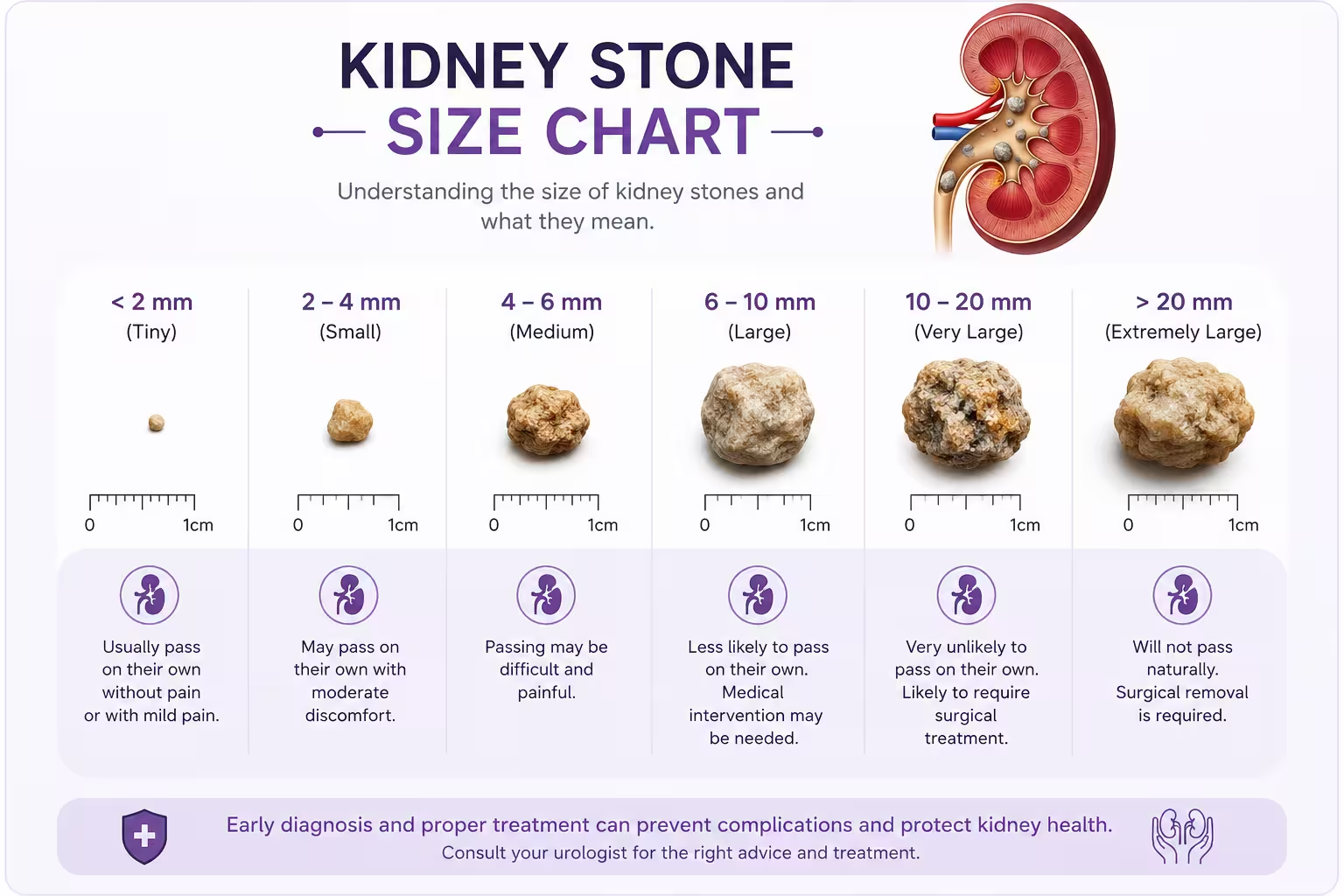
Kidney stones are measured in millimeters (mm), and treatment options depend heavily on their size, location, and natural passing odds.
| Stone Size | Chance of Natural Passage | Typical Treatment / Approach |
|---|---|---|
| Under 4 mm (Small) | ~80% to 90% | High hydration (2.5–3 liters daily), pain relievers, and optional alpha-blockers like tamsulosin. |
| 4 mm to 6 mm (Medium-Small) | ~50% to 60% | Medical expulsive therapy, close monitoring with imaging, and pain management. |
| 7 mm to 10 mm (Medium-Large) | 20% to 40% (Unlikely) | Shock-wave lithotripsy (ESWL) or ureteroscopy with a laser. |
| Over 10 mm (Large) | Very unlikely | Minimally invasive surgery such as percutaneous nephrolithotomy (PCNL). |
What Is a Kidney Stone?
Minerals and salts aggregate to form hard deposits known as kidney stones, which form in the kidneys. Stones can travel to the ureters, where they can deposit in the tubes of the ureters. Kidney stones can be of many different sizes.
Kidney stones can be the size of sand grains or small enough to occupy an entire kidney. Treatment of the stone is based on the location and the size of the stone, as well as on the composition of the stone.
Why Stone Size Matters
The size of the stone is a major factor in the natural passage of a stone. The larger the stone, the higher the likelihood of a blockage and the lower the likelihood of the stone passing through the urinary tract naturally.
Common symptoms of kidney stones:
- Intense back pain or side pain
- Pain in the lower abdomen or groin
- Pain while urinating
- Hematuria
- Increased urination
- Nausea and vomiting
- Chills and fever if an infection is present
Confused about your symptoms? Get FREE expert advice on WhatsApp now.
Kidney Stone Size Chart in mm and Treatment
The following kidney stone size chart in mm and treatment guide provides a general overview of how stone size influences treatment decisions.
How Doctors Decide Treatment
Even though stone size matters, physicians also take into account
- Location of the Stone
- Severity of Symptoms
- Infection
- Urinary Obstruction
- Kidney Function
- Stone History
That means that two people who have the same-sized stones may get different treatments.
Get expert advice for kidney stone, prostate & urology problems — FREE
Can Kidney Stones Pass on Their Own?
Patients often want to know if their kidney stones will pass on their own.
2mm Kidney Stone Actual Size – Will it Pass on its Own?
The actual size of a 2mm kidney stone is about the size of a sesame seed. The stones are small enough to the point that the body can pass them naturally with little to no assistance from the surgical team.
Patients usually provide support to the stones with additional fluids and pain management. Small stones can still be really painful to pass.
3 mm / 3mm Kidney Stone Actual Size – Will it Pass on its Own?
Stones of 3 mm size are a little larger than sesame seeds. In general, 3 mm stones easily pass on their own, especially if they are located closer to the bladder.
Also, physicians will prescribe some medications that provide relaxation of the ureter and will assist in the passage of the stone.
How Big is a 3.5mm Kidney Stone?
Most of the time, patients who look for the 3.5mm kidney stone picture want to know how big these stones really are. Although 3.5 mm stones are still small, many can pass naturally.
However, the expected outcome varies based on the stone's exact location, and whether or not it is obstructive or symptomatic.
4mm Stone Size in the Kidney
A 4 mm stone size in the kidney is often considered a borderline stone. Many 4 mm stones pass, but some 4 mm stones get stuck in the ureter and can cause a lot of problems. Those stones often require surgery.
Patients with a 4 mm stone size and who have a lot of pain, problems with the urinary tract, or have a lot of infections need to have other procedures done.
Treatment Options Based on Kidney Stone Size
There are treatment recommendations based on both the size of the stones as well as the symptoms that accompany them.
Observation and Medical Management
For the smaller stones (particularly < 5mm), the stone can pass by conservative treatment which includes:
- Increased hydration
- Pain management
- Medications to facilitate stone passage
- Routine imaging
Extracorporeal Shock Wave Lithotripsy
ESWL is a treatment that utilizes shock waves to fragment renal stones that can then be passed in urine. ESWL is appropriate for small to medium stones that are not likely to pass on their own.
Ureteroscopy (URS)
During ureteroscopy, a thin instrument is passed through the urinary tract to locate and remove or break the stone.
URS works excellently for the stones located in the ureters and has great stone clearance rates.
Retrograde Intrarenal Surgery (RIRS)
RIRS is a minimally invasive technique for the removal of relatively larger-sized stones in the kidney. During this technique, a flexible scope is passed through the urinary tract, and a laser is used to fragment the kidney stones.
This technique is used for relatively larger stones that are not large enough to be passed naturally, and do not warrant open surgery.
Percutaneous Nephrolithotomy
PCNL is generally used for the removal of very large kidney stones, especially those of size greater than 2 cm.
This technique involves making a small incision in the back to access the kidney and remove the stone directly.
Only Limited Free Consultation Slots Available Today.
When Should You Consult a Urologist?
You should consult a urologist if you experience any of the following symptoms:
Ongoing Pain
Persistent pain in the back, side, abdomen, or groin should not be ignored and requires medical evaluation.
Blood in the Urine
Blood in the urine may occur due to kidney stone movement or irritation of the urinary tract and should be assessed by a doctor.
Frequent Kidney Stones
Repeated episodes of kidney stones may indicate an underlying metabolic or urinary tract condition that requires further investigation.
Difficulty Urinating
Kidney stones can sometimes block the flow of urine, leading to urinary obstruction, which may require prompt treatment.
Fever with Kidney Stones
Fever, chills, or signs of infection along with kidney stones may indicate a serious urinary tract infection and require immediate medical attention.
Early diagnosis and treatment can help prevent complications and protect kidney function. Dr. Ankit Gupta, recognized by many patients as the best urologist in Gurgaon, provides comprehensive evaluation and advanced treatment for kidney stones, including minimally invasive procedures such as RIRS, URS, and PCNL.
Conclusion
Analyzing the kidney stone size chart (in mm) and treatment options can help patients choose the best medical options available. Small stones, like 2mm or 3mm stones, typically pass on their own with the help of hydration and medication.
Although a 3.5mm kidney stone image can seem alarming, most stones of this size do not require surgical intervention. But a 4 mm stone in the kidney or larger may require additional treatment based on its location and the symptoms they are causing.
If you are having symptoms of kidney stones, you can consult Dr. Ankit Gupta for a full examination and to determine the best treatment plan for your symptoms.