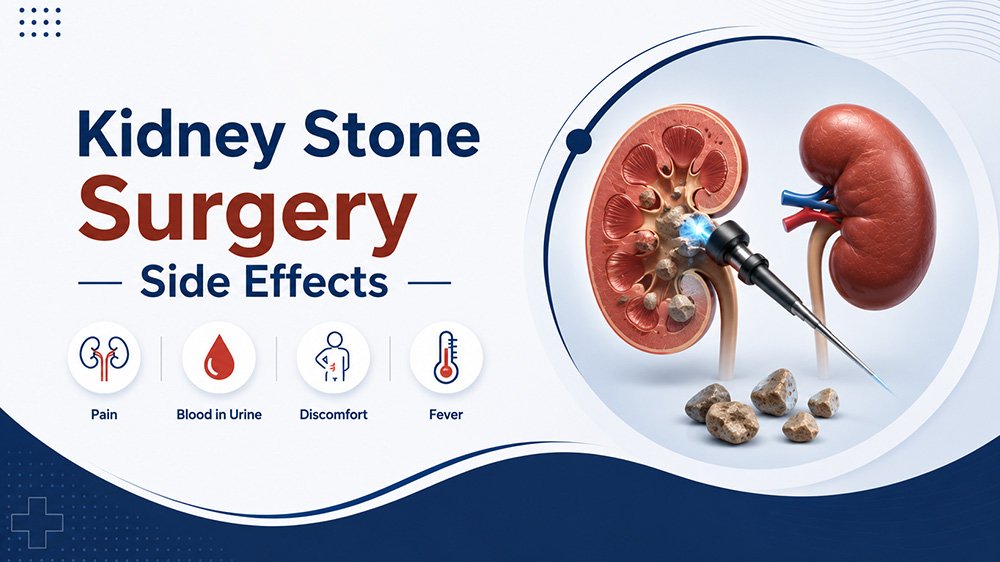
Common side effects after kidney stone surgery include blood in the urine, a burning feeling when you pee, and mild back or flank pain. If you have a temporary ureteral stent, you might also feel a frequent urge to urinate or bladder discomfort.
What Is Kidney Stone Surgery?
Kidney stone removal encompasses a variety of procedures to break up or remove larger stones that aren't able to pass on their own. Here are a few of the common types of procedures:
Ureteroscopy - A small scope is passed along the urinary tract to capture and/or break up the stone using a laser.
Retrograde Intrarenal Surgery - A flexible scope is passed within the kidney to break up the stone, all without an incision being made.
Percutaneous Nephrolithotomy - A small incision is made in the back to remove large or complicated kidney stones.
Shock Wave Lithotripsy - This procedure uses sound waves to break the stone up into smaller pieces that are able to pass in the urine.
The procedure that is selected determines what sort of recovery time is expected, what the side effects will be, and how long they will endure.
Common Kidney Stone Surgery Side Effects
Like all surgical procedures, many side effects of kidney stone surgery tend to be mild and temporary, resolving as your body heals. There are a variety of post-operative medications that can help manage them as well.
Post-operative kidney stone surgery side effects can include the following:
Pain or Discomfort: It is very normal to feel some abdominal and localized pain at the surgery site after kidney stone surgery.
Blood Discharge From Genitals: Shortly after the procedure, it is normal for urine to be pink to red.
Burning Urination: Post-ureteroscopy patients can expect to experience some mild urinary pain as well.
Increased Urination Frequency: Especially true for patients with a ureteral stent, the urge to urinate is normal.
Fatigue: It is completely normal to feel fatigued after the body has had to undergo the trauma of surgery and anesthesia.
Nausea: The combination of the anesthesia and post-operative care, including pain control, can cause temporary nausea.
Stent Discomfort: If a ureteral stent is placed, post-surgery patients will feel flank pain, urinary urgency, and bladder irritability until removal.
These will resolve in a few days to weeks, depending on the procedure.
Confused about your symptoms? Get FREE expert advice on WhatsApp now.
Kidney Stone Surgery Complications
Although major problems due to Kidney Stone Surgery are rare, potential problems must be acknowledged.
Some complications can be:
1. Urinary Tract Infection or UTI: During surgery or after it, bacteria can enter the urinary tract and cause fever or an infection that can be sensed by burning urination and/or cloudy urine.
2. Heavy Bleeding: Some bleeding is expected, but excessive bleeding is very concerning.
3. Damage to the Ureter or Kidney: Rarely, damage occurs due to the tools used during the procedure and can cause the need for another surgery.
4. Blocked Stone Fragments: Urine can become blocked by surgical fragments and cause pain and swelling.
5. Leakage of Urine: Rarely, surgery can cause a leak of urine from the urinary tract.
6. Other Surgery: Some patients need another procedure if all fragments of the stone have not been removed.
The best way to avoid these concerns is to work with an experienced urologist and the most important factor is to follow all of the post-operative instructions given.
Kidney Stone Surgery Recovery
Most patients do not experience lasting effects after a kidney stone removal surgery. However, the length of recovery does depend on the type of surgery performed, as well as the size of the stone removed.
Your doctor may suggest the following during recovery:
- Drink water to promote the removal of stone pieces
- Take pain medication and antibiotics
- Avoid heavy lifting and vigorous activity
- Walk to promote circulation and to prevent blood clots
- Keep all appointments for monitoring recovery and for stent removal
Patients usually return to normal activity within a few days after surgeries that are less invasive, such as URS and RIRS; however, if the surgery was for PCNL, recovery may take 2 to 4 weeks.
Get expert advice for kidney stone, prostate & urology problems — FREE
How to Reduce Kidney Stone Removal Side Effects
While some adverse effects of kidney stone removal are unavoidable, you can make recovery and reduce complications by following your doctor’s orders.
Here are a few things to keep in mind.
- Unless otherwise directed by your doctor, stay hydrated.
- Keep up with your medications by taking them as directed.
- Refrain from exercise and activity until after you have recovered.
- A nutritious and even diet will benefit you in recovery.
- Don’t hesitate to go to the bathroom when you have the urge.
- Maintaining a solid hygiene routine will protect you from unnecessary infections.
- Complete all other necessary scheduled doctor’s visits to remove your stent.
You and your doctor will benefit most from your visits.
When Should You Contact Your Urologist After Kidney Stone Surgery?
Mild discomfort is expected after kidney stone surgery. However, you should contact your urologist immediately if you experience any of the following:
- Fever higher than 100.4°F (38°C)
- Severe or worsening pain that is not relieved by medication
- Significant bleeding or blood clots in the urine
- Difficulty urinating or inability to pass urine
- Persistent nausea or vomiting
- Chills or other signs of infection
- Severe and ongoing pain after ureteral stent placement that interferes with your daily activities
Prompt medical attention can help prevent serious complications and support a smoother recovery. If you experience any of these symptoms, consult Dr. Ankit Gupta, the Best Urologist in Gurgaon, for timely evaluation and expert post-operative care.
Conclusion
Most side effects from kidney stone surgery aren’t permanent and will get better with some rest and care. Pain, blood in the urine, burning while urinating, and fatigue are common during the early portion of recovery and should get better in a couple of days or weeks. Though complications from kidney stone surgery are rare, being cognizant to the concerns as well as the doctor’s advice will help recover easier.
If you are thinking about kidney stone surgery or have concerns regarding it, get in contact with Dr Ankit Gupta to get a better diagnosis, better treatment, and better care.