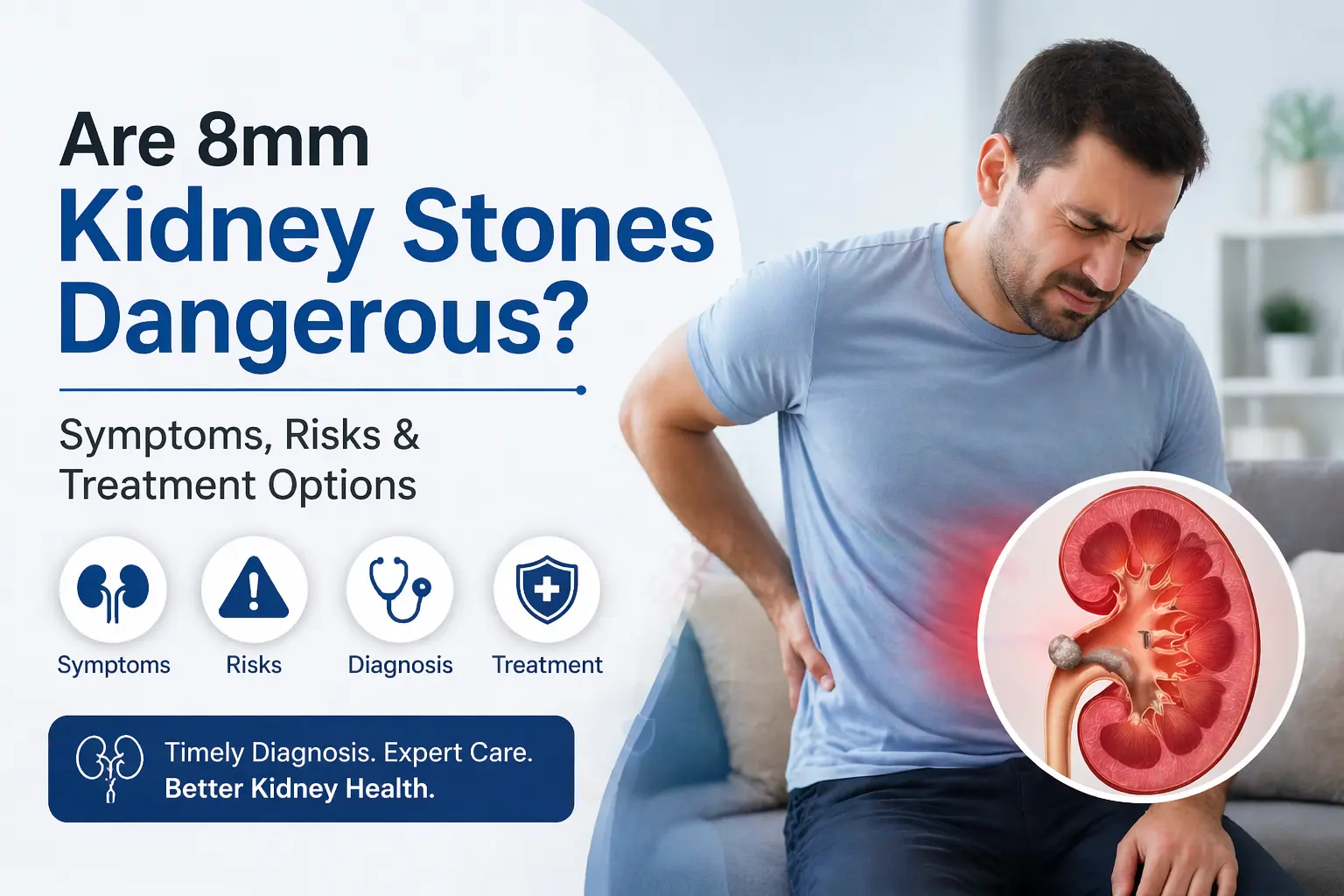
An 8 mm kidney stone has a low chance of passing naturally (about 20% to 50%) and frequently requires medical evaluation or a urological procedure.
What is an 8mm Kidney Stone?
An 8mm kidney stone is classified as a large stone:
- Stones <5mm → usually pass naturally
- Stones >6mm → often require medical treatment
An 8mm stone is roughly the size of a pea, making it difficult to pass through the ureter.
Symptoms of an 8mm Kidney Stone
- Severe pain in the lower back or side
- Pain radiating to abdomen or groin
- Burning sensation during urination
- Blood in urine (pink/red urine)
- Frequent urge to urinate
- Nausea and vomiting
Confused about your symptoms? Get FREE expert advice on WhatsApp now.
Why Are 8mm Kidney Stones Dangerous?
1. Urinary Blockage
The stone can block urine flow, causing intense pain.
2. Kidney Swelling (Hydronephrosis)
Blocked urine increases pressure in the kidney.
3. Infection Risk
Urine buildup can lead to urinary tract infections.
4. Kidney Damage
Untreated blockage may cause permanent kidney damage.
Can an 8mm Kidney Stone Pass Naturally?
No, 8mm kidney stones rarely pass on their own.
Most stones larger than 6mm require medical intervention.
Waiting for natural passage can:
- Increase pain duration
- Lead to complications
- Delay proper treatment
Get expert advice for kidney stone, prostate & urology problems — FREE
Treatment Options for 8mm Kidney Stones
1. Medications
Pain relief and ureter-relaxing medicines.
2. Ureteroscopy (URS) with Laser
Minimally invasive procedure to break stones.
3. Shock Wave Lithotripsy (ESWL)
Non-surgical method using sound waves.
4. Percutaneous Nephrolithotomy (PCNL)
Used for large or complex stones.
When to See a Urologist?
Seek immediate medical attention if you have:
- Severe or persistent pain
- Fever or chills
- Blood in urine
- Difficulty urinating
- Nausea or vomiting
Only Limited Free Consultation Slots Available Today.
Conclusion
An 8mm kidney stone is a serious condition that usually requires medical treatment. Early diagnosis and timely intervention can prevent complications and ensure faster recovery. If you experience symptoms, consult a qualified urologist without delay.
FAQs
1. Is an 8mm kidney stone considered large?
Yes, an 8mm kidney stone is considered large and usually does not pass naturally without medical treatment.
2. Can an 8mm kidney stone pass on its own?
No, stones larger than 6mm rarely pass naturally and often require medical procedures.
3. What happens if an 8mm kidney stone is not treated?
It can cause urinary blockage, severe pain, infection, and even kidney damage if left untreated.
4. What is the best treatment for an 8mm kidney stone?
Common treatments include ureteroscopy (URS), shock wave lithotripsy (ESWL), and PCNL for larger stones.
5. When should I see a doctor for a kidney stone?
You should consult a doctor if you have severe pain, fever, blood in urine, or difficulty urinating.
Book Appointment
Consult Dr. Ankit Gupta - urologist in Gurgaon for expert urology care. Timely diagnosis and treatment ensure faster recovery and better long-term health.