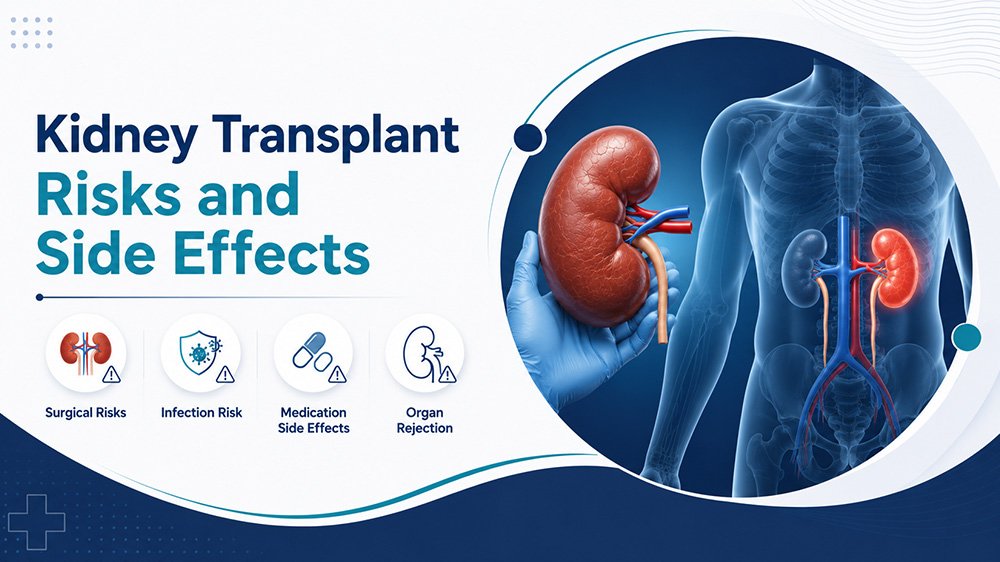
Transplanting a kidney can be a more beneficial option to reduce draining dialysis than enduring long-term dialysis for patients suffering from end-stage kidney failure.
Similar to any major surgery, there are risks and lifelong implications. Knowing about the Kidney Transplant Risks and Side Effects can help patients with the understanding necessary to prepare themselves for the surgery and the complications to look for post surgery that may warrant some medical assistance.
In this blog, we will cover the most common Kidney Transplant Side Effects, the possible Kidney Transplant Complications, the Risks of Kidney Transplant Surgery, and what the patient should prepare for in their Kidney Transplant Recovery.
What Is a Kidney Transplant?
A kidney transplant involves removing a failed kidney and placing a healthy one from a donor into a recipient. Donors may be living or deceased, and the provided kidney will perform the function of the original ones by filtering blood and balancing and maintaining the body’s fluids and functions.
There is no permanent cure for kidney disease with a kidney transplant, but the hope and goal is that a transplant allows kidney patients to live longer, have a higher quality of life, and seek less frequent medical treatment.
Risks of Kidney Transplant Surgery
Like every surgery, a kidney transplant has some risks. Here are some possible pitfalls to consider, as no surgery is excellent:
Transfusions: Losing blood is a common occurrence and isn’t a problem; however, if you lose a lot of blood, a transfusion will be necessary.
Infections: There is the potential for infection in the surgical site and the urinary tract during the early stages of recovery.
Clots: Blood clots can form in the blood vessels leading to the implanted kidney.
Anesthesia Reactions: There will always be a small potential for problems with anesthesia during large surgeries.
Urinary Leakage or Blockage: Urinary leakage may happen at the kidney or bladder connection and may become blocked and need to be fixed.
The team will also take several precautions and closely monitor your recovery.
Confused about your symptoms? Get FREE expert advice on WhatsApp now.
Common Kidney Transplant Side Effects
Most patients experience some temporary side effects after a kidney transplant. These are usually manageable and tend to improve as the body heals and adjusts to the new kidney.
Some of the most common kidney transplant side effects include:
- Pain or discomfort around the surgical incision
- Fatigue and low energy during the first few weeks after surgery
- Swelling around the incision site
- Constipation
- Increased appetite, which may lead to weight gain
- Mood changes or emotional stress
Patients also need to take lifelong immunosuppressive (anti-rejection) medications to prevent organ rejection. These medicines can cause side effects such as high blood sugar, high blood pressure, acne, tremors, increased susceptibility to infections, stomach problems, and weight gain. Your transplant team will monitor these side effects closely and adjust your medications when necessary.
Kidney Transplant Complications You Should Know About
Certain complications may arise during the earlier or later stages after surgery even though most patients recover well after a kidney transplant.
Early Complications
These usually take place within the first few weeks of the surgery and may include:
- Infections at the surgical site
- The function of the transplanted kidney starts later than expected
- Blood clots that compromise the blood supply to the kidney
- Leakage of urine or obstructed urinary passage
- Collection of fluid around the kidney transplant
Serious complications are not likely to happen if these are diagnosed and treated in good time.
Long-Term Complications
Patients need continual follow-up after successful recovery. Here are some complications that may arise:
Organ Rejection: The immune system may see the new kidney as a threat and try to destroy it.
Hypertension: This is a new normal after the surgery and is a cause for concern.
Post Transplant Diabetes: Some immunosuppressants increase the likelihood of diabetes.
Greater susceptibility to infections: Immunosuppressant drugs increase the likelihood of the body getting infections.
Cancers: The lengthy suppression of the immune system is a cause for certain types of skin cancer and other types of cancer.
All of the above reasons are why patients should keep up with follow-up appointments after a kidney transplant.
Get expert advice for kidney stone, prostate & urology problems — FREE
Kidney Transplant Recovery: What to Expect
Kidney transplant recovery depends on the individual, but typical hospital stays are about a week. Functioning kidneys are monitored, as well as urine and medications.
Home recovery takes several more weeks. During this stage of recovery, patients need to follow certain guidelines, including:
- Taking all prescribed medications.
- Avoiding heavy lifting and vigorous activities.
- Going to all scheduled appointments and lab tests.
- Staying well hydrated.
- Following a nutritious diet.
- Maintaining no smoking and minimal drinking.
- Following the doctor's orders for gradually resuming normal activities.
Depending on recovery and the type of work, many patients are able to return to work and normal activities in 2 to 3 months.
When Should You Call Your Doctor After a Kidney Transplant?
After a kidney transplant, watch for the following warning signs and seek immediate medical attention if you experience:
- Chills or fever
- Reduced urine output
- Severe pain around the transplant site
- Increased swelling, redness, or pus around the surgical incision
- Sudden swelling in the legs or face
- Unexplained rapid weight gain
- Persistent nausea, vomiting, or diarrhea
- High blood pressure that does not improve with medication
These symptoms may indicate serious complications, such as an infection, organ rejection, or problems with the transplanted kidney, and should never be ignored.
If you notice any of these warning signs, consult Dr. Ankit Gupta, the Best Urologist in Gurgaon, without delay. Prompt evaluation and timely treatment can help protect your transplanted kidney and improve long-term outcomes.
Only Limited Free Consultation Slots Available Today.
Can the Risks Be Reduced?
While it is not possible to completely remove the risks and side effects associated with kidney transplants, having a proper plan in place and abiding by it can help alleviate the likelihood of issues.
These include the following: be sure to do the following:
- Follow your doctor and/or medical team providing care after the transplant
- Attend all prescribed post-operative appointments
- Practice proper hygiene
- Maintain a balanced diet
- Modify your physical activity and exercise level accordingly
- Do not consume tobacco and/or other smoking-related products
- Report things that seem out of the ordinary immediately
All the things noted above are necessary to help protect the kidney that was transplanted and ensure that your health is in good standing.
Conclusion
For people experiencing kidney failure, a kidney transplant can lead to a more active and enhanced quality of life. As with any transplant procedure, potential kidney transplant risks and side effects must be considered. Some kidney transplant side effects only occur temporarily, but some major kidney transplant complications may be permanent and highly involved.
Fortunately, the majority of transplant recipients who maintain a healthy lifestyle and take their prescribed medications and maintain their transplant follow-ups attain a high quality of life post-transplant and enjoy continued good health.
If you are considering a kidney transplant, explore your treatment options, possible kidney transplant surgery risks, and receive customized care recommendations and prognosis for an uncomplicated recovery from your kidney transplant by Dr. Ankit Gupta.