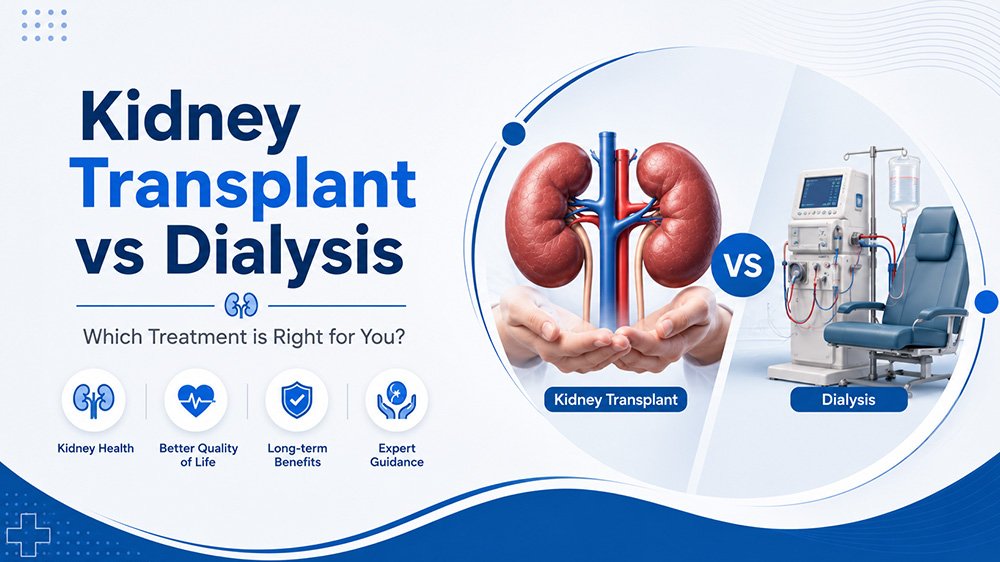
Kidney failure (or end-stage kidney disease) occurs when the kidneys stop being able to filter the waste and excess fluid from the body. From this point, there are treatment options that are needed to sustain life. The two most common treatment options are dialysis and kidney transplantation. Patients and many of their families come to the question: “What is the best option, kidney transplantation or dialysis?”
The answer to this is dependent on many factors including: how healthy you are overall, how old you are, what caused your kidney failure, and whether there is a donor who will provide you with a kidney. This article will present to you what the options and risks are between a kidney transplant and dialysis and help you with your own conclusion in kidney transplant vs dialysis, which is a better option?
What Is Dialysis?
Like healthy kidneys, dialysis filters waste, excess fluid, and toxins from the blood. Unlike healthy kidneys, dialysis does not remove toxins.
Two varieties of dialysis exist.
Hemodialysis: Blood undergoes filtration through a dialysis machine. This is usually performed three times a week in a dialysis center but can also be performed at home.
Peritoneal Dialysis: A catheter is inserted into the abdomen and a special fluid is introduced to remove waste from the abdominal cavity. This method can be performed at home.
Dialysis is especially warranted for patients with significantly reduced kidney function and is performed as a stopgap measure before a kidney transplant.
What Is a Kidney Transplant?
A kidney transplant is a surgery done when a person in kidney failure receives a healthy kidney from a donor. A transplant restores more functions of a kidney for the patient than dialysis does. Many people have the opportunity to live a more active, independent lifestyle after a transplant.
After the surgery, most people are required to take immunosuppressants for the rest of their lives. These medications are given to eliminate the risk of the kidney being rejected. Patients are regularly monitored with checkups to ensure that the new kidney is coping well.
Confused about your symptoms? Get FREE expert advice on WhatsApp now.
Difference Between Kidney Transplant and Dialysis
Understanding the difference between a kidney transplant and Dialysis helps patients make informed decisions together with their healthcare provider.
Benefits of Dialysis
Dialysis has many benefits, such as:
- being a good option for most patients with kidney failure as it is ready for use immediately
- No large surgeries are needed for patients
- It lessens the symptoms patients are experiencing by removing waste and extra fluids
- It can be done in a hospital and can even be done at home in certain cases.
Benefits of a Kidney Transplant
For eligible patients, a kidney transplant is often the better option for a long-term solution compared with remaining on dialysis. The benefits include:
- Enhanced quality of life
- Increased overall energy
- Increased freedom from the burden of having to undergo dialysis
- Limited dietary and fluid restrictions
- Increased long-term survival in many patients
- Ability to work and travel again
The reason these points, among others, are usually the reason for asking questions like “Kidney Transplant vs Dialysis: Which Is Better?” is for the long-term benefit of the patient; kidney transplant is often the most preferred option.
Kidney Transplant vs Dialysis: Which Is Better?
Regarding Dialysis vs. Kidney Transplant, there isn't a clear answer.
Usually a transplant is recommended to expedite a patient’s independence, given that a transplant has a more favorable outcome in both long-term and in terms of quality of life. However, this is contingent on the patient’s overall health and determines whether surgery is a feasible option. The patient may have to remain on dialysis if there is no available donor kidney.
Dialysis is a fantastic option for patients who are ineligible for a transplant, who may not be candidates for surgery, or as the immediate treatment for kidney failure.
What is best for the patient depends on their healthcare provider's recommendation, their health, and personal choice. The provider and their transplant team will create the best treatment plan.
Get expert advice for kidney stone, prostate & urology problems — FREE
Risks of Both Treatments
There are some drawbacks to both treatments.
Side effects of dialysis may include:
- Low blood pressure
- Muscle cramps
- Fatigue
- Infection at the access site
- Kidney transplant may include:
- Issues with the surgery
- The body rejects the transplant
- Greater risk of infections because of immunosuppressant drugs
- Constant check-ins with the doctor along with other drugs for the rest of your life
Your doctor will assess your health and recommend the treatment with the lowest potential risks.
Conclusion
For people with kidney failure, there is probably no better choice than between a kidney transplant and dialysis.
Dialysis saves lives and sustains kidney function, but a transplant is likely to improve long-term health and quality of life, as well as facilitate greater independence, for most patients. The most appropriate therapy is a function of your medical status, general health, and eligibility for a transplant.
If you are one of the people dealing with an advanced stage of kidney disease, get in touch with Dr. Ankit Gupta, the best urologist in Gurgaon, for an assessment of your health status and an individualized recommendation for the most appropriate therapy.
Frequently Asked Questions
1. How does dialysis differ from a kidney transplant?
Transferring toxins from the blood and filtering the blood is one main function of the kidneys. This is done artificially in dialysis. A healthy kidney from a donor is implanted into a recipient in a kidney transplant.
2. Is a kidney transplant or dialysis better?
Transplanting a kidney is preferred, provided the patient is eligible. There is a better quality of life and longer life expectancy compared to patients on dialysis. For patients who can’t receive a transplant, dialysis is the best option.
3. Is it possible to go from being a dialysis patient to receiving a kidney transplant?
Yes. Many patients first go on dialysis and after some time, they receive a kidney transplant when a donor is found.
4. Is going on dialysis a permanent thing?
Generally, it is not permanent. Some people go on dialysis while waiting for a transplant and some patients may need to remain on it for many years if they're not eligible for a transplant.
5. How do you determine if I qualify for a kidney transplant?
Many factors determine if you qualify for a kidney transplant. These factors include the stage of kidney disease, personal health history, and a transplant workup. A transplant team and a urologist would evaluate these factors to determine if you qualify.